May 12, 2026
Why Now Is the Best Time to Move Complex Chemical Production From Europe to the United States

FutureFuel
Chemical Company
-

-

-
.png)
- Share
Europe has long been a world leader in chemicals, from specialty intermediates to high-value plastics and advanced materials. But the conditions that made long-term chemical investment easy such as stable energy costs, predictable regulation, and straightforward supply chains have become harder to rely on. At the same time, the United States has become increasingly attractive for chemical manufacturing due to abundant feedstocks, improving infrastructure, and a policy environment that supports industrial expansion.
For many chemical firms, the “best time” to shift complex production is not a generic future date, it is now, when cost pressures, permitting dynamics, and supply-chain realities are aligning in ways that can reduce risk and improve competitiveness.
Below are the key reasons the present moment is uniquely favorable for relocating complex chemical production from Europe to the United States. At FutureFuel, we are ready to take on this production at our 2200-acre production site, centrally located in Batesville, Arkansas.
FutureFuel Chemical Company is a U.S. based specialty chemical synthesis company and manufacturer of specialty chemicals used across coatings, industrial materials, agriculture, and specialty chemical markets. Through advanced chemical synthesis and large-scale production capabilities, FutureFuel manufactures high performance products, intermediates, and monomers for customers requiring reliable supply and consistent product quality. FutureFuel functions as your custom chemical manufacturing concierge to take a concept through commercialization, efficiently using their rich history and expertise.
1) The energy and feedstock equation is more favorable in the U.S.
Complex chemical plants are often energy and feedstock intensive. Even modest percentage differences in input costs can determine whether a facility earns a margin or struggles to break even, especially for products with tight pricing and global competition.
The United States has benefited from:
- Strong natural gas availability often translating to lower energy costs for many industrial processes
- Mature hydrocarbon and chemical supply ecosystems near major manufacturing hubs
- Increased integration between upstream and downstream facilities which can reduce procurement risk and logistics costs
While European energy costs can fluctuate significantly, the U.S. advantage is structural: it is tied to long-term industrial capacity and the feedstock base that underpins chemical value chains.
Why this matters now: chemical investment cycles can take years. If U.S. cost advantages remain, the firms that act early are positioned to capture savings sooner and lock in long-term industrial economics before competitors saturate new capacity.
2) Supply-chain resilience is becoming a competitive requirement, not a bonus
Complex chemical production depends on more than raw inputs. It requires reliable sourcing of:
- Specialized catalysts and reagents
- High-purity utilities and water systems
- Skilled maintenance and process engineering talent
- Quality-certified logistics for intermediates and hazardous materials
Europe’s recent disruptions whether from geopolitical tension, shipping interruptions, or localized regulatory and operational constraints have made supply continuity a strategic concern.
In the U.S., industrial clustering and expanding manufacturing capacity can help reduce bottlenecks. Many chemical and materials companies are already building networks that support:
- Faster switching between suppliers
- More local “just-in-case” inventory strategies
- Shorter lead times for critical components
Why this matters now: facilities relocate with long lead times. Acting now enables companies to reestablish supply chains and quality systems while U.S. supplier capacity is still growing, rather than after a demand surge forces longer waits.
3) Investment and permitting dynamics can be faster than many firms expect
Complex chemical projects are known for lengthy timelines. Delays are common around engineering, procurement, permitting, utilities, and grid interconnection.
Although the U.S. has its own regulatory and permitting requirements, chemical industrial development has been accelerating in certain regions, supported by:
- FutureFuel has a 2200 Acres of a fully permitted Industrial park with generous environmental limits and a full range of utilities
- A deep base of in-house construction and engineering services experienced in chemical expansions
Why this matters now: You can align with existing infrastructure and contractor availability, reducing building and construction time and accelerating time to market.
4) Scale and ecosystem effects make FutureFuel increasingly compelling
Relocating complex chemical production is most effective when it can be paired with ecosystem advantages such as suppliers, co-located utilities, and shared services such as technical labs and production support services.
- Waste handling and environmental service capabilities
- Technical talent pipelines and training infrastructure
- Existing production infrastructure available for re-purposing, leading to low capital cost
- Strong, capable, long-tenured workforce.
Why this matters now: By utilizing existing production infrastructure that is available for re-purposing, firms can achieve a lower capital cost compared to greenfield investments. FutureFuel’s scale-up capability is backed by 50 years of expertise and a portfolio of over 2,000 different products.
5) The regulatory and compliance landscape can align better with “time-to-plant”
European standards can be strict and thorough, which is often a strength for global markets. However, strictness can also mean uncertainty for complex projects particularly when regulation is evolving quickly or interpreted differently across jurisdictions.
At FutureFuel, you will find a more predictable path to execution with permitting headspace, which is able to absorb additional production on-site.
Why this matters now: in chemical manufacturing, execution speed affects profitability, market share, and risk exposure.
6) Demand growth in the Americas supports long-term viability
Relocating production isn’t only about Europe versus the U.S.; it’s about market access and customer proximity.
If end markets in North America and globally are shifting toward suppliers with reliable output and competitive pricing, then proximity to U.S. and regional buyers becomes valuable. Many chemical products feed directly into:
- Automotive and transportation supply chains
- Construction and infrastructure materials
- Consumer and industrial coatings
- Packaging and plastics
- Agriculture and crop protection intermediates
Why this matters now: building capacity ahead of sustained demand growth can secure longer-term supply contracts and better customer relationships especially for specialty products that require close collaboration.
Conclusion: The time is now to consider a move to US based production
Moving complex chemical production from Europe to the United States is rarely a decision made by cost alone. It’s a strategic move about reliability, execution, and competitiveness.
At FutureFuel, we have a proven track record of scaling up new production at our site in Arkansas. We have room, infrastructure, broad experience, and strong technical and engineering support to guide our customers' manufacturing plants from concept to full-scale production.
As the regulatory landscape in Europe continues to evolve, FutureFuel provides a more predictable path for complex projects. The alignment of energy advantages, infrastructure readiness, and market proximity makes the present moment the ideal time to transition your manufacturing footprint.
-

-

-

- Share :
News Room
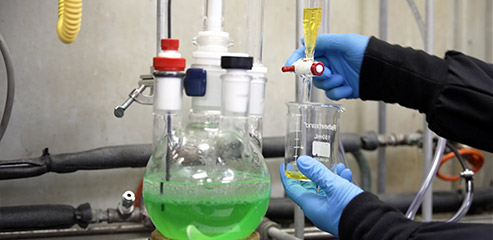
From Concept to Commercialization: How FutureFuel Transforms Chemical Ideas into Full-Scale Production
Every successful chemical product begins as an idea. Yet, translating a promising concept into a commercially viable, full-scale production run is a demanding transition in the chemical industry. It demands a disciplined, multidisciplinary approach capable of bridging the gap between the lab and full-scale commercial production.
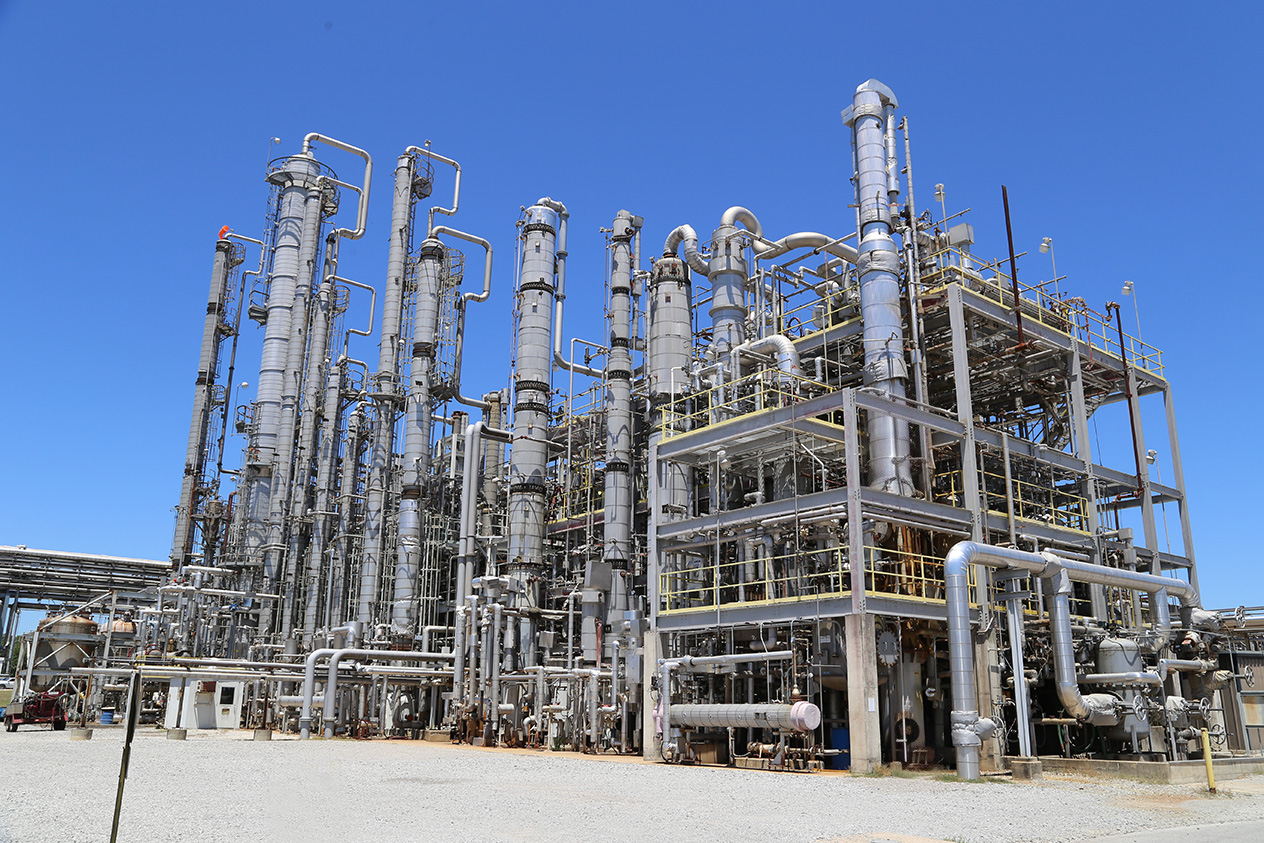
Investing in the Future of Chemical Manufacturing: Infrastructure and Laboratory Upgrades at FutureFuel
When a manufacturing partner experiences infrastructure downtime or lacks the data integrity required for modern compliance, the customer bears the financial burden of delayed market entry and broken supply chains. To ensure uninterrupted service and support advanced technical requirements, a manufacturing partner must aggressively reinvest in its physical assets and analytical infrastructure.
Driving Innovation with FutureSol Hydrogen Chloride Solutions
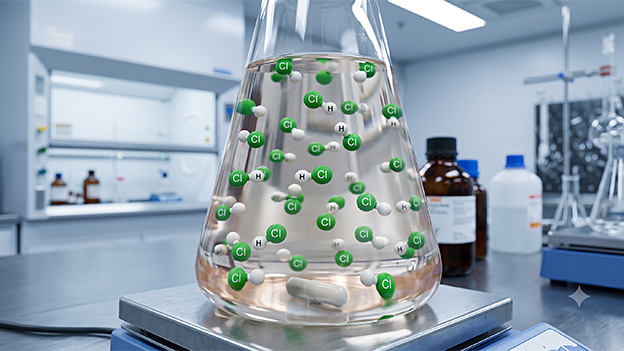
Handling anhydrous hydrogen chloride gas presents intense engineering and safety challenges for any facility. The process demands specialized corrosion resistant piping, advanced atmospheric scrubbing systems, and continuous safety monitoring. In addition, the HCl solutions require cold storage for long-term stability. To alleviate these burdens for our partners, we are expanding our product portfolio to include a specialized new subset of FutureSol solvents focused exclusively on Hydrogen Chloride solutions.
have a project
in mind?
Learn how our expertise can fast track and scale your complex chemical product.
Terms and Conditions: